drone manual
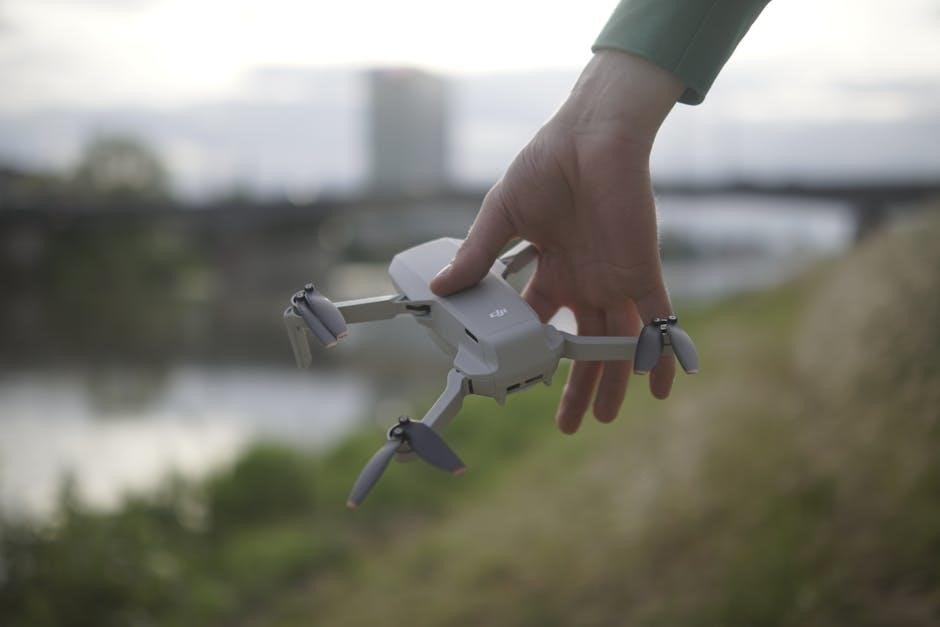
This user manual expertly guides you through mastering your new Quadcopter Drone, ensuring a successful experience. Drones, now a popular gadget,
are utilized for aerial photography, surveillance, and recreation, with new manuals continually emerging to aid users.
What is a Drone?
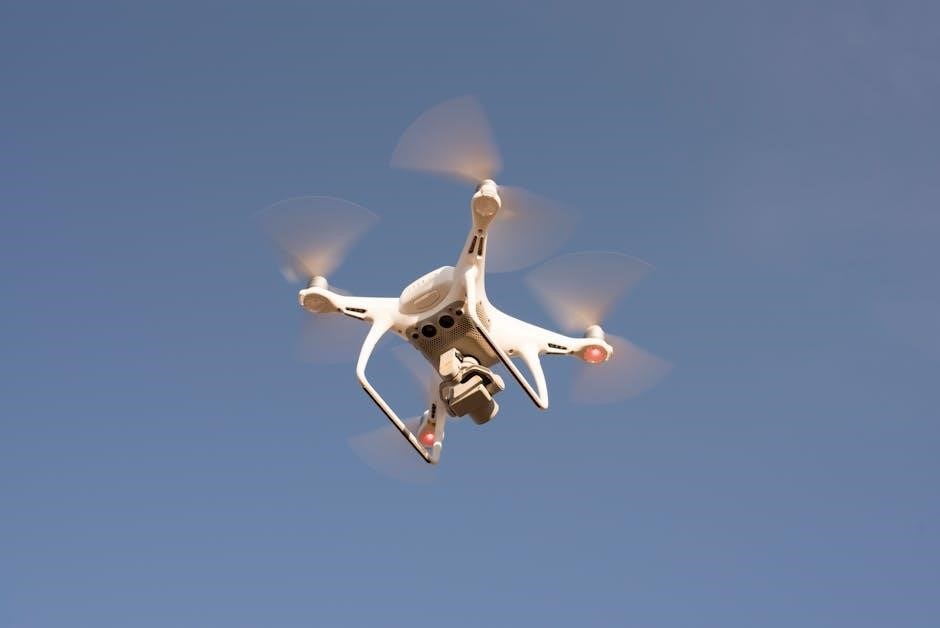
A drone, often referred to as an Unmanned Aerial Vehicle (UAV), represents a revolutionary technology rapidly gaining prominence across diverse sectors. Initially developed for military applications, drones have transitioned into accessible tools for hobbyists, professionals, and industries alike. This manual focuses on quadcopter drones, characterized by their four rotors providing stability and maneuverability.
The increasing affordability and ease of use have fueled the drone’s popularity, transforming it into a “must-have gadget.” Whether capturing breathtaking aerial photography, conducting surveillance, or simply enjoying recreational flight, drones offer unique capabilities. Journalists are increasingly leveraging drone technology to enhance their reporting, benefiting from its cost-effectiveness. Understanding the core functionalities and safe operation, as detailed within this manual, is crucial for maximizing the potential of your drone.
Types of Drones (Consumer, Commercial)
Drones broadly categorize into two main types: consumer and commercial. Consumer drones, often purchased for recreational use, prioritize ease of operation and affordability. These are popular for aerial photography, videography, and simply enjoying the experience of flight. They typically feature user-friendly interfaces and automated flight modes, making them accessible to beginners, as this manual aims to facilitate.
Commercial drones, conversely, are designed for professional applications. These include surveying, inspection, agriculture, and journalism, where precise data collection and reliability are paramount. They often boast advanced features like high-resolution cameras, specialized sensors, and extended flight times. The increasing use by journalists demonstrates their value. Selecting the appropriate drone type depends on your intended application and budget, with this manual providing foundational knowledge applicable to both categories.
Drone Components: A Basic Overview
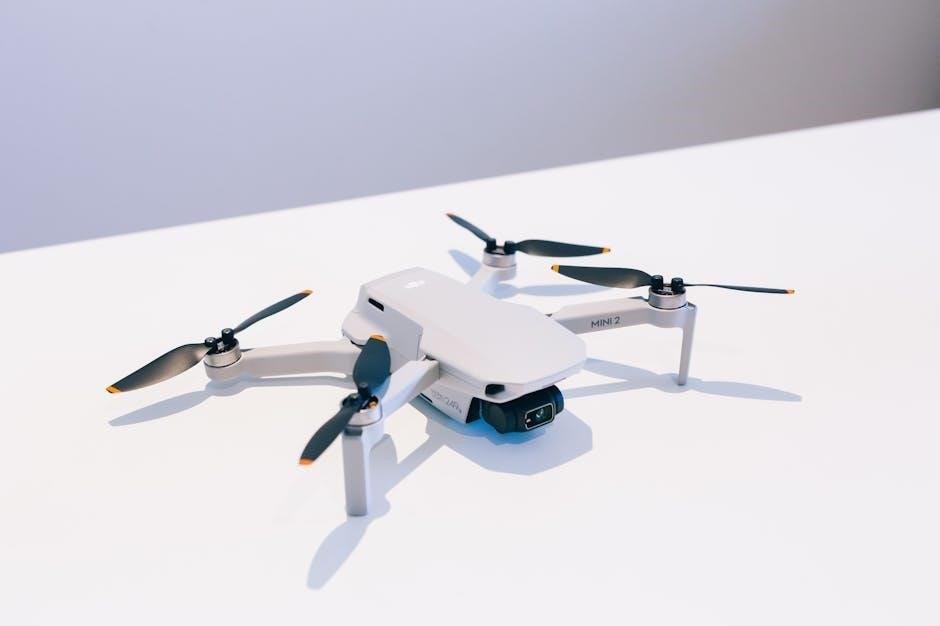
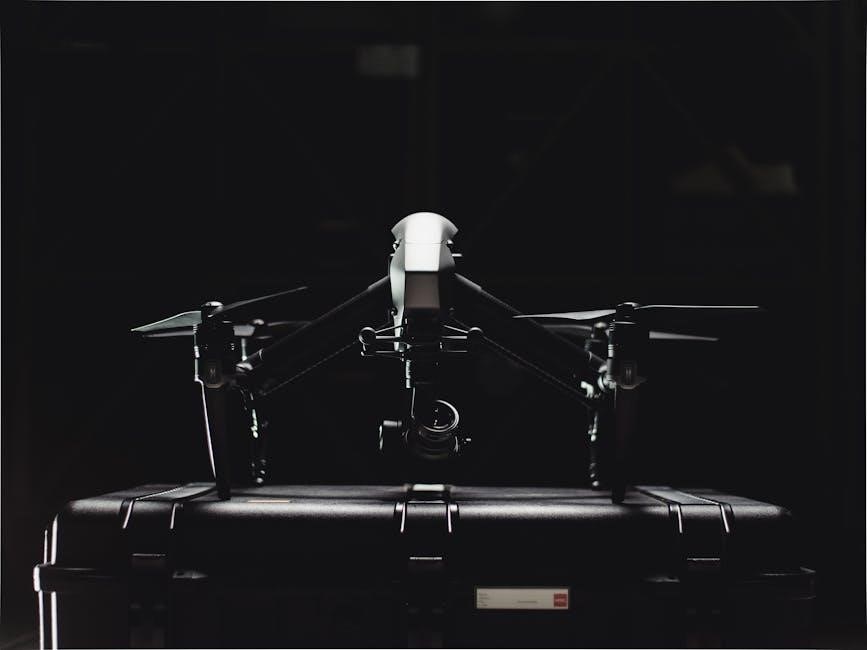
Understanding the core components is crucial for safe and effective drone operation. The frame provides structural integrity, housing essential elements. Motors, paired with propellers, generate lift and control movement. An electronic speed controller (ESC) regulates power to each motor. The flight controller acts as the drone’s brain, processing sensor data and pilot commands.
Power is supplied by a battery, requiring careful management as detailed in this manual. A receiver interprets signals from the remote controller. Many drones include a GPS module for positioning and autonomous flight features. Finally, the camera and gimbal (if equipped) capture aerial footage. This manual is designed to help you understand how these components interact, ensuring you can confidently operate your new drone and troubleshoot potential issues.
Pre-Flight Checks & Safety Procedures
Before each flight, meticulous checks are vital for safety and optimal performance. This manual emphasizes battery status, propeller condition, and software updates for reliable operation.
Battery Management & Charging
Proper battery care is paramount for drone safety and longevity. Always inspect batteries for physical damage – swelling, cracks, or leaks – before each flight, and never use damaged batteries. Utilize only the manufacturer-approved charger specifically designed for your drone’s battery type.
Charging should occur in a safe, fire-resistant location, away from flammable materials, and never leave batteries unattended during charging. Fully charge batteries before flight, but avoid overcharging, as this can degrade performance and pose a safety risk.
Understand your battery’s capacity and discharge rate to accurately estimate flight time. Store batteries in a cool, dry place when not in use, and consider using “storage mode” to maintain optimal health during prolonged periods of inactivity. Regularly check battery voltage and cycle them periodically to prevent deep discharge.
Propeller Inspection & Replacement
Regular propeller checks are crucial for safe drone operation. Before each flight, meticulously inspect each propeller for cracks, chips, bends, or any signs of damage. Even minor imperfections can significantly impact flight stability and control. Ensure propellers are securely attached to the motors, verifying that the screws are tightened to the manufacturer’s specifications.
If a propeller is damaged, it must be replaced immediately. Never attempt to repair a damaged propeller, as this compromises its structural integrity. Always replace propellers in pairs, even if only one is damaged, to maintain balanced aerodynamic performance.
When replacing propellers, ensure you use the correct type and size specified for your drone model. Incorrect propellers can lead to motor strain, reduced efficiency, and potential crashes. Properly install the propellers, paying attention to the direction of rotation indicated on each propeller.
Firmware Updates & Software Installation
Maintaining up-to-date firmware and software is paramount for optimal drone performance and safety. Manufacturers regularly release updates that address bugs, enhance features, and improve stability. Check the drone manufacturer’s website or companion app for available updates before each flight.
The update process typically involves downloading the latest firmware to your computer and then transferring it to the drone via a USB connection. Always follow the manufacturer’s instructions carefully during the update process, as interruption can potentially brick the drone.
Similarly, ensure the drone’s control app is the latest version. Updates to the app often include improved user interfaces, new functionalities, and compatibility enhancements. A stable and current software ecosystem ensures seamless communication between the drone and the controller.
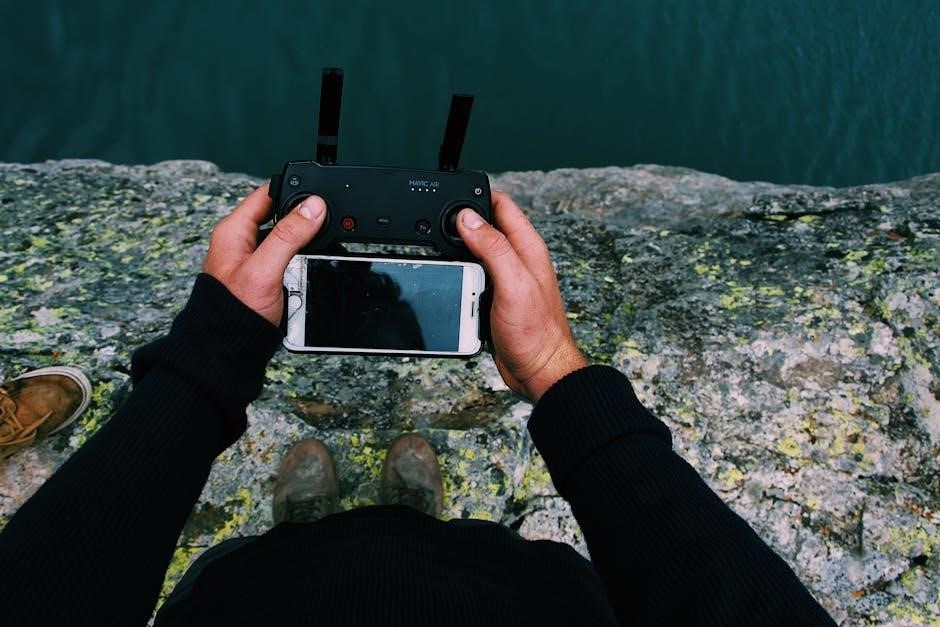
Understanding Drone Controls
Mastering the transmitter and flight modes—GPS, ATTI, and Manual—is crucial. Proper calibration of the IMU and compass ensures stable, predictable flight performance.
Transmitter (Remote Controller) Functions
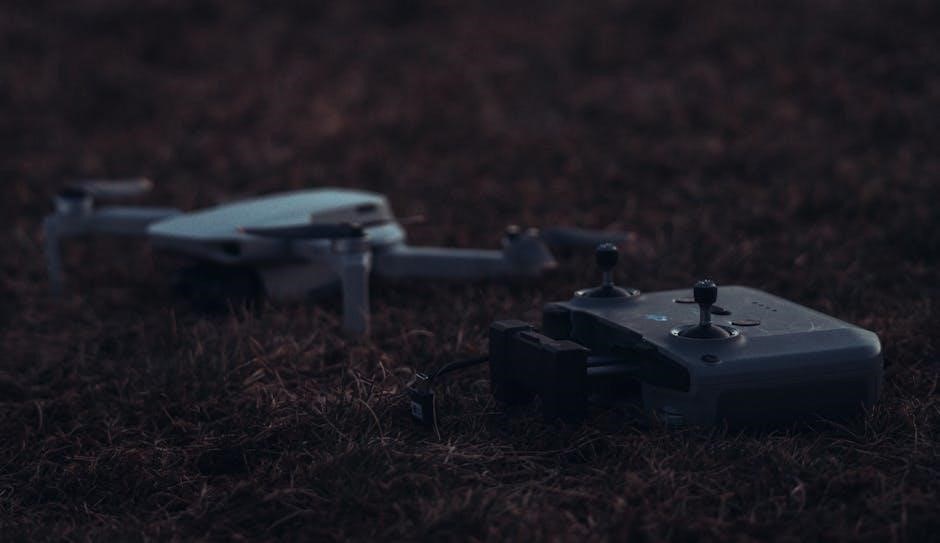
The transmitter, or remote controller, is your primary interface with the drone, dictating its every move. Understanding its functions is paramount for safe and effective operation. Typically, dual control sticks manage throttle and yaw on one side, and pitch and roll on the other. These control the drone’s altitude, rotation, and directional movement.
Additional buttons and switches activate features like Return-to-Home (RTH), intelligent flight modes (orbit, follow me), and camera controls. Many transmitters feature customizable buttons, allowing pilots to assign frequently used functions for quick access. Digital displays provide crucial flight data, including battery voltage, signal strength, altitude, and distance. Familiarizing yourself with each button, switch, and display element is essential before each flight, ensuring a seamless and responsive control experience.
Flight Modes (GPS, ATTI, Manual)
Drones typically offer several flight modes, each providing a different level of assistance and control. GPS mode utilizes satellite signals for precise positioning, enabling features like stable hovering, Return-to-Home, and waypoint navigation. It’s ideal for beginners and automated tasks. ATTI mode (Attitude) disables GPS, relying on the drone’s internal sensors (IMU) to maintain stability. This mode is useful in areas with poor GPS signal or when more direct control is desired.
Manual mode offers complete control, disabling all stabilization features. It requires significant piloting skill as the drone will not self-level or hold its position. Experienced pilots use this mode for advanced maneuvers and filming. Understanding the characteristics of each mode and selecting the appropriate one for the flight conditions is crucial for safe and enjoyable drone operation.
Calibration Procedures (IMU, Compass)
Accurate calibration is essential for optimal drone performance and safety. IMU (Inertial Measurement Unit) calibration ensures the drone accurately senses its orientation and movement. This process typically involves placing the drone on a perfectly level surface and initiating the calibration sequence through the drone’s software. Compass calibration is equally vital, compensating for magnetic interference from nearby metal objects or electronic devices.
Calibration requires rotating the drone horizontally and vertically, following the on-screen prompts. Failure to calibrate properly can lead to unstable flight, drifting, or inaccurate positioning. Regularly performing these calibrations, especially after transport or changes in location, guarantees reliable and predictable flight behavior. Always refer to your drone’s manual for specific calibration instructions.
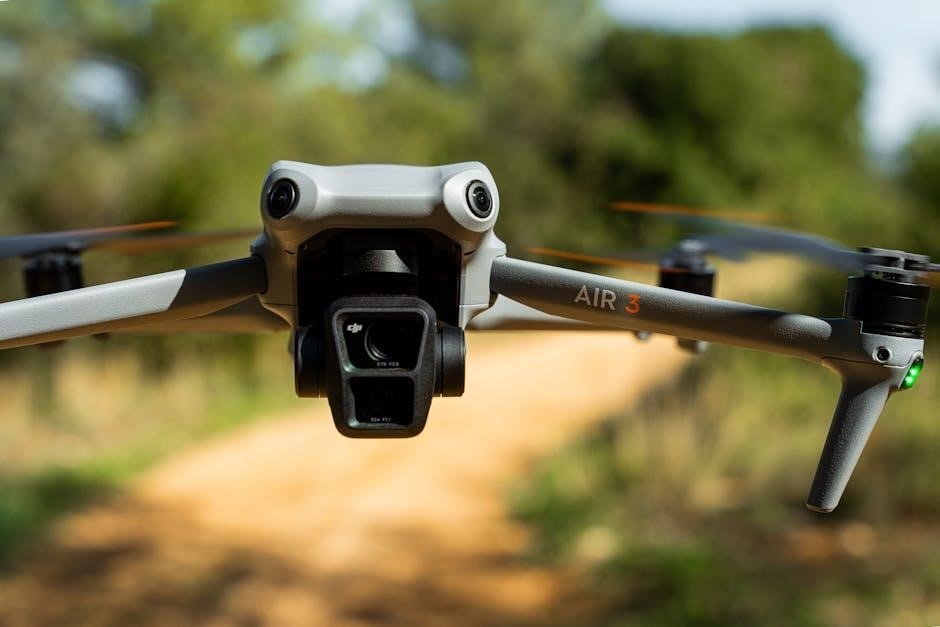
Basic Flight Operations
Mastering takeoff and landing, alongside fundamental maneuvers like ascending, descending, and strafing, is crucial. Utilize the Return-to-Home function for safety and control.
Takeoff & Landing Procedures
Prior to initiating flight, ensure a clear and level takeoff area, free from obstructions like people, buildings, or power lines. Begin by powering on the drone and the transmitter, establishing a secure connection as indicated by the drone’s status lights. Most drones offer automated takeoff options; however, manual takeoff involves gently increasing throttle until the drone achieves a stable hover at a safe altitude – typically a few feet.
For landing, carefully descend the drone, maintaining a controlled rate of descent. Select a designated landing spot, again ensuring it’s clear of obstacles. Automated landing features are available, or you can manually land by gently decreasing throttle until the drone touches down. Always power down the drone after it has landed completely to prevent unexpected movements.
Remember to always prioritize safety and maintain visual line of sight throughout the entire takeoff and landing process.
Basic Maneuvers (Ascend, Descend, Forward, Backward, Strafe)
Mastering fundamental maneuvers is crucial for confident drone operation. Ascending is controlled by pushing the left stick upwards, while descending involves pushing it downwards. Forward and backward movement are achieved by tilting the left stick forward or backward, respectively. Be gentle with these controls to avoid abrupt movements.
Strafe maneuvers – moving left or right without rotating the drone – are executed by tilting the right stick left or right. Practice these movements in an open area to develop muscle memory and a feel for the drone’s responsiveness.
Smooth, coordinated control comes with practice. Start slowly, focusing on precise movements, and gradually increase speed as your proficiency grows. Always maintain visual line of sight and be aware of your surroundings.
Using the Return-to-Home (RTH) Function
The Return-to-Home (RTH) function is a vital safety feature, automatically piloting your drone back to its takeoff point. Activation is typically achieved via a dedicated button on the transmitter or within the drone’s app. Before relying on RTH, ensure the home point is accurately set – usually defined by a strong GPS signal during initial setup.
RTH has limitations. Obstacle avoidance may not be fully functional during RTH, so clear airspace is essential. Also, RTH altitude is pre-set; confirm it’s high enough to clear surrounding obstacles.
Familiarize yourself with your drone’s RTH settings and practice activating it in a safe, open environment. Understanding its behavior can prevent unexpected landings and ensure a safe return.
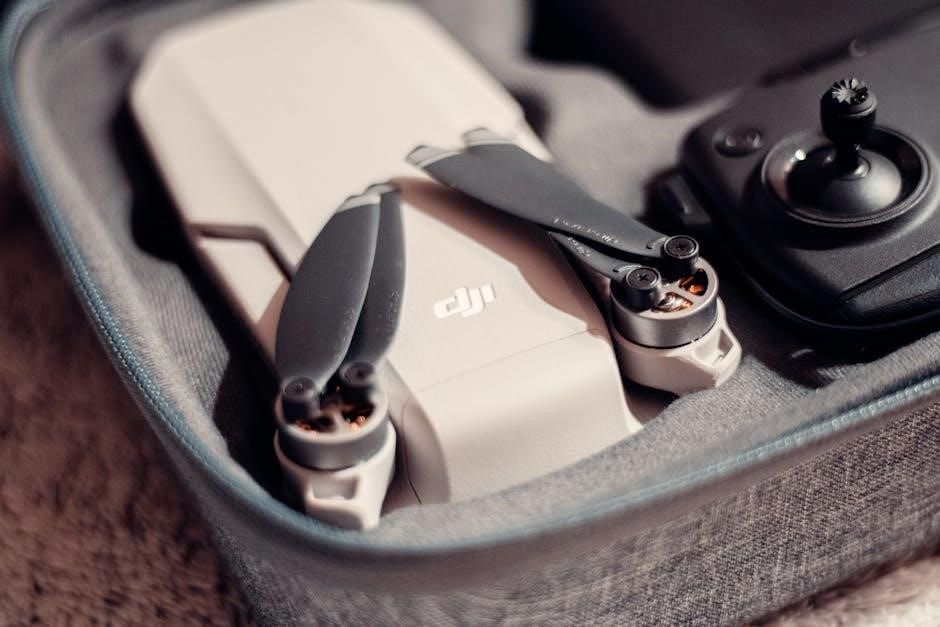
Camera Operation & Settings
Mastering camera controls allows for stunning aerial footage. Adjust angles, resolution, and frame rates to capture perfect photos and videos, utilizing gimbal stabilization.
Camera Angle Adjustment
Precise camera angle adjustment is crucial for capturing compelling aerial perspectives. Most drones feature a tilting camera mechanism, controlled directly from the transmitter or via the drone’s mobile application. Understanding the full range of motion – typically from a downward-facing view to a forward-looking horizon – is essential for framing your shots effectively.
Experiment with different angles to achieve dynamic compositions. A slight downward tilt can emphasize landscapes, while a more level angle is ideal for capturing structures or moving subjects. Remember to consider the gimbal’s role in stabilizing the camera; smooth adjustments are key to avoiding jerky footage. Utilize the on-screen display (OSD) to monitor your camera’s angle in real-time, ensuring you’re achieving the desired perspective. Practice makes perfect – dedicate time to mastering this fundamental skill for professional-looking results.
Photo & Video Settings (Resolution, Frame Rate)
Optimizing photo and video settings is vital for achieving high-quality aerial content. Resolution dictates image detail; higher resolutions (e.g., 4K) provide sharper images but require more storage space. Frame rate (fps) affects video smoothness – 24fps mimics cinematic motion, while 30fps is standard for general use, and 60fps enables slow-motion effects.
Understand the trade-offs between these settings. Higher resolutions and frame rates demand greater processing power and storage capacity. Adjust settings based on your intended use; for social media, 1080p at 30fps may suffice, while professional projects benefit from 4K at 24/30fps. Explore your drone’s settings menu to access options like ISO, shutter speed, and white balance for further creative control. Experiment to find the perfect balance for your specific shooting conditions.
Understanding Gimbal Control
The gimbal is crucial for stable aerial footage, counteracting drone movements. It utilizes motors and sensors to keep the camera level, resulting in smooth videos and sharp photos. Most gimbals offer multiple control modes: Pan Follow, Tilt Follow, and FPV (First-Person View). Pan Follow locks the roll axis, allowing panning left and right. Tilt Follow locks the roll and pan, enabling tilting up and down.
FPV mode disables stabilization, mirroring the drone’s movements for a dynamic, immersive perspective. Mastering gimbal control involves understanding these modes and adjusting them mid-flight. Utilize the transmitter’s control dials or the drone’s app to fine-tune gimbal settings. Practice smooth transitions between modes to achieve professional-looking results. Proper gimbal calibration is also essential for optimal performance.
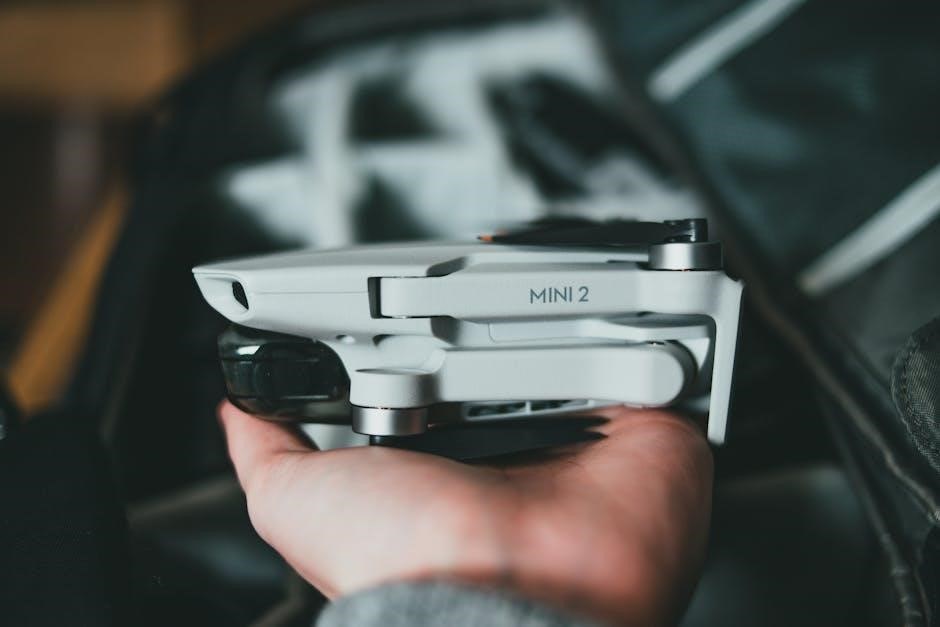
Advanced Flight Techniques
Explore creative maneuvers like Orbit Mode, Follow Me, and Waypoint Navigation for dynamic shots. These features, detailed in your drone manual, elevate aerial filming.
Orbit Mode & Point of Interest
Orbit Mode allows your drone to circle a selected subject, maintaining a consistent distance and angle – perfect for capturing cinematic footage. Your drone manual will detail how to set the orbit radius and direction, ensuring smooth, stable rotations.
Point of Interest (POI) takes this a step further. Instead of simply orbiting, the drone will lock its camera onto a specific point, even as the drone itself moves. This is ideal for complex shots where you want to maintain focus on a static subject while changing perspectives.
Consult your manual for specific instructions on activating and customizing these modes, including adjusting flight speed, altitude, and gimbal settings. Mastering these techniques unlocks a new level of creative control, enabling you to produce professional-quality aerial videos and photographs; Remember to practice in an open area before attempting complex maneuvers.
Follow Me Mode Operation
Follow Me Mode utilizes your drone’s GPS and visual sensors to automatically track and follow a designated subject – typically the remote controller, or a mobile device with the drone’s app installed. Your drone manual will detail the activation process and safety precautions for this feature.
Before engaging Follow Me Mode, ensure a strong GPS signal and a clear, unobstructed view of the subject. The manual will likely advise selecting an open area, free from obstacles like trees or buildings, to prevent collisions.
Adjustable settings, as outlined in your manual, may include following distance, flight speed, and obstacle avoidance sensitivity. Always maintain visual contact with your drone and be prepared to regain manual control if necessary. Responsible operation and adherence to the manual’s guidelines are crucial for a safe and enjoyable experience;
Waypoint Navigation & Flight Planning
Waypoint Navigation allows for pre-programmed flight paths, enabling automated flight to multiple designated points. Your drone manual will provide detailed instructions on utilizing the associated flight planning software, typically accessible via a mobile app or computer interface.
Flight planning involves setting specific GPS coordinates for each waypoint, defining altitude, speed, and camera angles at each location. The manual will emphasize the importance of thoroughly reviewing the planned route for potential obstacles and airspace restrictions.
Before initiating a waypoint mission, ensure a strong GPS signal and a clear understanding of the drone’s return-to-home (RTH) functionality. Always monitor the flight progress and be prepared to intervene manually if needed. Careful planning and adherence to the manual’s guidance are essential for successful and safe waypoint missions.
Drone Regulations & Legal Considerations
Your drone manual stresses adherence to FAA regulations (in the USA) and local laws. Responsible drone use prioritizes privacy and awareness of airspace restrictions for safe operation.
FAA Regulations (USA)
Your drone manual will emphasize the importance of understanding and complying with Federal Aviation Administration (FAA) regulations when operating drones within the United States. Currently, most drone operations require registration with the FAA, and pilots must obtain a Remote Pilot Certificate if flying for commercial purposes. This certificate necessitates passing a knowledge test demonstrating understanding of airspace regulations, weather effects, and operational limitations.
Furthermore, the FAA establishes rules regarding altitude restrictions – generally, drones cannot be flown above 400 feet – and prohibits operation near airports or restricted airspace without prior authorization. Maintaining visual line of sight with the drone is also a crucial requirement. Your manual should detail how to access FAA resources, such as the B4UFLY app, to check for airspace restrictions and temporary flight restrictions (TFRs) before each flight. Ignoring these regulations can result in substantial fines and penalties.
Local Laws & Restrictions
Your drone manual must stress that FAA regulations are just the starting point; local and state laws often impose additional restrictions on drone operation. Cities, counties, and even homeowners’ associations may have ordinances prohibiting flights over private property, parks, or specific events. These laws can vary significantly, so diligent research is essential before each flight.
The manual should advise checking local government websites and contacting relevant authorities to ascertain any applicable rules. For example, some areas may require permits for commercial drone operations or restrict flights near sensitive infrastructure. Privacy concerns are also frequently addressed at the local level, with laws governing the collection and use of aerial imagery. Responsible drone pilots respect these local regulations, ensuring safe and legal operation within their communities. Failure to comply can lead to fines or legal repercussions.
Privacy Concerns & Responsible Drone Use
Your drone manual should dedicate a section to privacy, emphasizing the ethical considerations of aerial photography and videography. Drones equipped with cameras can capture images and videos of individuals and private property, raising legitimate privacy concerns. Responsible drone pilots respect the privacy of others and avoid intentionally recording or photographing people without their knowledge or consent.
The manual must advise against flying over private property without permission and highlight the importance of being mindful of surroundings. It should also explain the potential legal ramifications of violating privacy laws. Promoting responsible drone use includes understanding and adhering to all applicable regulations, respecting personal boundaries, and prioritizing safety and ethical conduct. A commitment to these principles fosters public trust and ensures the continued enjoyment of drone technology.
Troubleshooting Common Issues
Your drone manual should detail solutions for connection problems, GPS signal loss, and motor malfunctions, offering clear guidance for quick and effective issue resolution.
Drone Won’t Connect to Controller
If your drone fails to connect to the controller, consult your drone manual for specific troubleshooting steps. Begin by verifying that both the drone and controller have sufficient battery power, as low battery levels can impede the connection process. Ensure the controller is properly turned on and in the correct pairing mode, often indicated by a flashing light.
Next, check the USB cable connecting the controller to your mobile device (if applicable) for any damage or loose connections. Restart both the drone and the controller, and attempt the pairing process again, carefully following the instructions in your drone manual. Interference from other wireless devices can also disrupt the connection; move to an open area away from potential sources of interference.
Finally, confirm that the drone’s firmware and the controller’s software are up-to-date, as outdated software can cause compatibility issues. If problems persist, refer to the manufacturer’s website or contact their support team for further assistance.
GPS Signal Loss & Recovery
Experiencing GPS signal loss during flight is a common issue, often occurring in areas with tall buildings, dense trees, or indoors. Your drone manual will detail specific procedures, but generally, the drone will attempt to maintain its position using visual sensors or, if unavailable, enter ATTI mode. Immediately assess your surroundings and prepare for manual control.
Avoid abrupt maneuvers and attempt to fly towards an open area with a clear view of the sky to re-establish the GPS connection. The drone’s Return-to-Home (RTH) function may be unavailable or inaccurate without a strong GPS signal; be prepared to pilot the drone manually back to the takeoff point.
Regularly check the GPS signal strength indicator on your controller’s screen. Prior to flight, ensure the drone has acquired a sufficient number of satellites for stable operation, as outlined in your drone manual.
Motor Issues & Troubleshooting
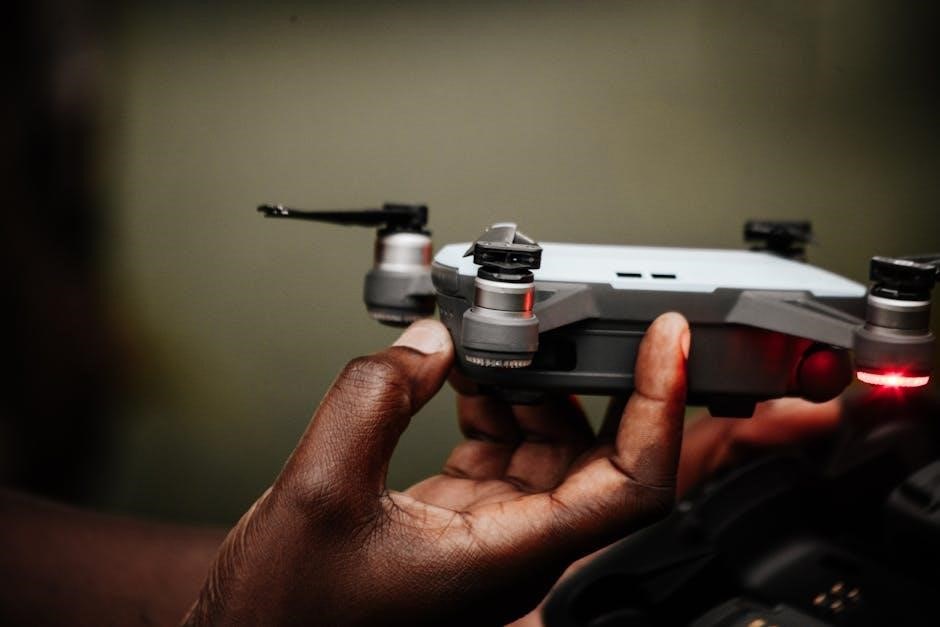
Motor problems can range from unusual noises to complete failure, significantly impacting flight safety. Your drone manual provides crucial troubleshooting steps. First, visually inspect each motor for obstructions like debris or damaged propellers. Listen for irregular sounds during startup and flight – whining, clicking, or grinding indicate potential issues.
If a motor isn’t responding, attempt a recalibration procedure as detailed in the manual. Check the motor connections and ESC (Electronic Speed Controller) for loose wires or damage. Never attempt to repair motors yourself unless you possess the necessary technical expertise; improper repairs can create further hazards.
Regularly inspect motors for overheating after flights. Consult your drone manual for recommended maintenance schedules and replacement guidelines for optimal performance and longevity.