beer pong rules pdf
Beer Pong Rules: A Comprehensive Guide (February 02, 2026)
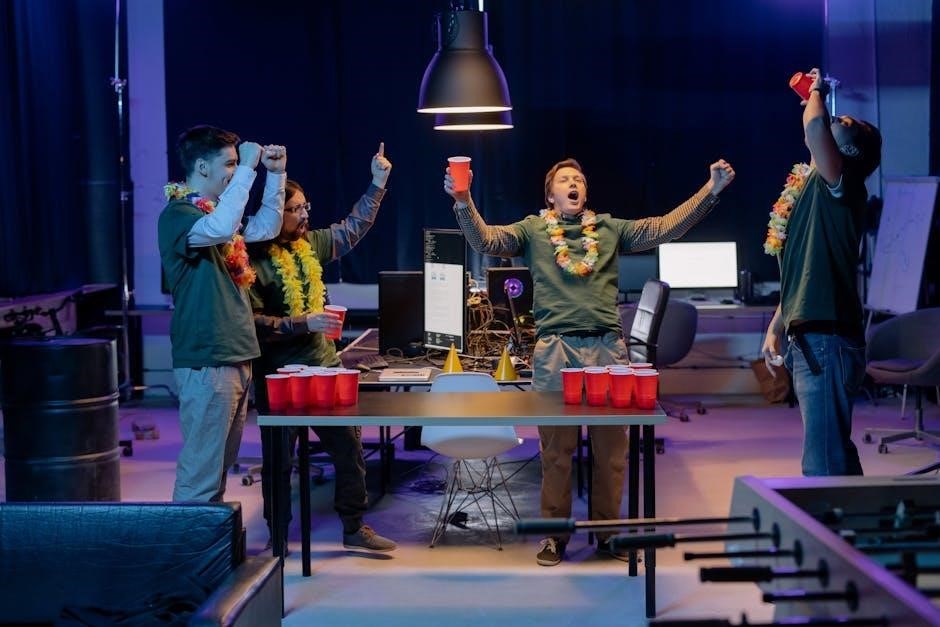
Beer Pong, also known as Beirut, is a popular social game blending skill and luck. Official rules dictate a 2×8 foot table and 16oz cups, filled a quarter full.
Beer Pong, frequently interchanged with the name Beirut, has firmly established itself as a cornerstone of social gatherings, particularly thriving within college environments. This engaging game seamlessly combines elements of dexterity, strategic thinking, and a touch of chance, making it a universally appealing pastime. Its origins are deeply rooted in a vibrant social history, evolving from casual beginnings to a globally recognized competitive activity.
The game’s core appeal lies in its simplicity and accessibility. Requiring minimal equipment – a table, cups, and a ball – Beer Pong fosters a dynamic and interactive experience. Whether played in a relaxed setting or a more structured tournament, it consistently delivers moments of laughter, friendly competition, and memorable social interaction. Understanding the nuances of the official rules is key to enjoying a fair and spirited game.

This guide aims to provide a comprehensive overview of Beer Pong, covering everything from setup and gameplay to penalties and winning conditions.
Historical Background of Beer Pong (Beirut)
The precise origins of Beer Pong, also known as Beirut, are somewhat debated, shrouded in the lore of college campuses and social gatherings. While pinpointing a definitive “birthdate” proves elusive, the game’s roots are generally traced back to the 1980s. Many attribute its inception to students at Dartmouth College, who adapted a game involving ping pong balls and beer cups, inspired by games like flip cup.
The name “Beirut” itself emerged from the game’s early association with fraternity life and a perceived resemblance to the Lebanese capital’s turbulent history – a metaphorical representation of the chaotic and competitive nature of the game. However, this connection remains largely anecdotal.
Over the decades, Beer Pong spread rapidly across North American universities, evolving with regional variations and informal rule sets. Its popularity surged in the 2000s, fueled by media exposure and the rise of competitive Beer Pong leagues. Today, it remains a beloved tradition, a testament to its enduring appeal and simple, yet engaging, gameplay.
The Core Objective of the Game
The fundamental objective of Beer Pong is deceptively simple: to eliminate all of the opposing team’s cups by skillfully launching ping pong balls into them. Teams alternate throwing, aiming for accuracy and strategic targeting. A successful hit – whether a direct landing (“swish”) or after a single bounce – requires the opposing team to remove a cup from their pyramid.
However, Beer Pong is more than just a test of throwing prowess. It’s a game of strategy, requiring players to assess cup arrangements, anticipate opponent throws, and manage their own dwindling defenses. The game continues until one team successfully clears all cups, declaring them the victor;
Crucially, the game incorporates a social element; penalties often involve drinking, adding a layer of consequence to missed shots and strategic fouls. Ultimately, Beer Pong is about camaraderie, competition, and a little bit of playful indulgence.
Setting Up the Beer Pong Table
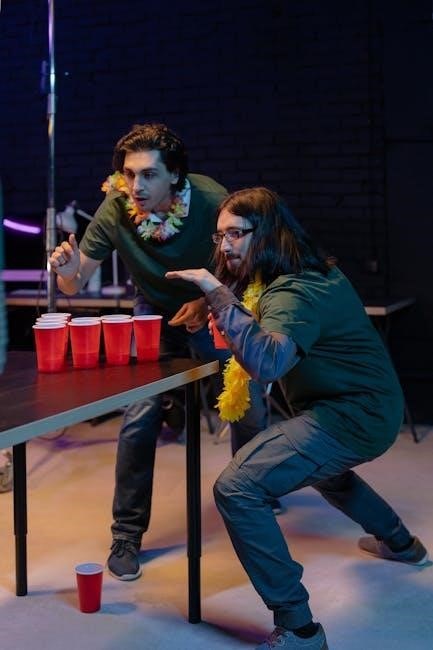
Proper setup is key! Utilize a 2×8 foot table and arrange 16oz Solo or Dixie cups in a pyramid formation. Fill each cup roughly a quarter full.
Table Dimensions: The Official Standard (2×8 feet)
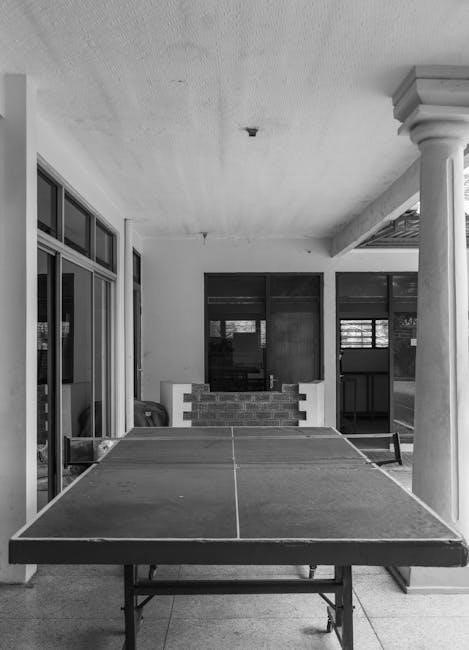
The foundation of a legitimate Beer Pong game rests upon adhering to the official table dimensions: a regulation size of 2 feet wide and 8 feet long. This standardized size isn’t merely a suggestion; it’s a crucial element ensuring fair play and consistent gameplay across all matches. Tables specifically designed for Beer Pong are readily available, mirroring these precise measurements.
Using a table deviating from this standard can introduce inconsistencies, impacting shot accuracy and overall game dynamics. While casual games might tolerate slight variations, competitive play demands strict adherence. The 2×8 foot dimension provides an optimal playing field, balancing the challenge of making accurate throws with the need for a reasonable distance between teams.
Many retailers offer tables specifically marketed for Beer Pong, guaranteeing the correct size. Ensuring your table meets this specification is the first step towards a truly authentic Beer Pong experience.
Cup Selection: Solo vs. Dixie 16oz Cups
When it comes to selecting the appropriate cups for a Beer Pong showdown, the choice often boils down to two industry titans: Solo and Dixie 16oz cups; Both brands are widely accepted and frequently utilized in both casual and competitive settings, but subtle differences can influence gameplay. Solo cups are renowned for their rigidity and durability, offering a stable target for those aiming for a ‘swish’.
Dixie cups, while also reliable, possess a slightly softer texture. Some players prefer this, believing it allows for a more satisfying ‘bounce’ shot. Crucially, both brands provide the necessary straight lines aiding in accurate liquid level measurement – a quarter-full is the standard.
Ultimately, the “best” cup is a matter of personal preference. However, consistently using the same type of cup throughout a game is vital for maintaining fairness and predictability.
Cup Arrangement: The Pyramid Formation
The cornerstone of a legitimate Beer Pong setup lies in the precise arrangement of the cups – the iconic pyramid formation. This isn’t merely aesthetic; it’s fundamental to the game’s strategic depth. Traditionally, a three-six-three pyramid is employed, meaning three cups form the base, six cups comprise the middle row, and three cups complete the apex.
Cups must be positioned directly behind one another, creating a stable and visually clear target. Maintaining consistent spacing between cups is crucial for fair play, preventing accidental knockdowns and ensuring each cup presents a legitimate challenge.
Any deviation from this standard pyramid risks disrupting the game’s balance. A well-constructed pyramid not only looks professional but also enhances the overall Beer Pong experience.
Liquid Fill Level: Quarter-Full Rule
Maintaining the correct liquid level within each cup is paramount to upholding the integrity of a Beer Pong game. The universally accepted standard, enshrined in official rules, dictates that each cup should be filled approximately one-quarter full. This isn’t arbitrary; it strikes a delicate balance between challenge and playability.
Too much liquid renders the cups overly sensitive, increasing the likelihood of accidental splashes and making accurate shots exceedingly difficult. Conversely, insufficient liquid diminishes the satisfying “swish” sound and reduces the penalty for a successful hit.
Rigid lines on Solo or Dixie 16oz cups aid in precise measurement, ensuring consistency across all cups. Adhering to the quarter-full rule fosters fair competition and enhances the overall enjoyment of the game.

Gameplay Mechanics
Beer Pong involves two-player teams alternating shots from behind a designated line, aiming to land a ball into opposing team’s cups. Scoring occurs upon successful hits!
Team Composition: Two-Player Teams
Beer Pong is fundamentally designed as a team sport, with the standard configuration consisting of two players per side. This dynamic fosters collaboration, strategy, and a shared experience amongst teammates. While variations allowing for larger teams or individual play exist, the official rules and competitive play overwhelmingly favor the two-player format.
The partnership aspect is crucial; teammates often develop coordinated throwing styles and defensive strategies. Communication is key, as players must quickly assess the table layout, anticipate opponent’s shots, and decide which cups to target. A strong team dynamic can significantly increase a team’s chances of success.
Furthermore, the team structure introduces a layer of shared responsibility, particularly regarding penalties. As outlined in the rules, if one teammate incurs a penalty, both players are typically required to drink, reinforcing the collaborative nature of the game. This element adds to the social and engaging atmosphere of Beer Pong.
Taking Turns: Alternating Shots
A core element of Beer Pong gameplay revolves around a strict alternating shot sequence. Once a team possesses the ball, players must take turns throwing, ensuring each teammate has an equal opportunity to contribute to their team’s success. This systematic approach prevents one player from dominating the game and promotes a balanced competitive environment.
Typically, teams designate a throwing order before the game begins, and this order must be maintained throughout each round. After each shot, regardless of whether it’s a successful hit or a miss, possession immediately transfers to the opposing team for their turn. This continuous back-and-forth rhythm keeps the game flowing and maintains a high level of engagement.
Adhering to the alternating shot rule is crucial for fair play. Any deviation from this established sequence can result in a penalty, as determined by a referee or agreed upon by both teams, often involving a mandatory drink.
Throwing Technique: Behind the Line
Maintaining proper throwing form is paramount in Beer Pong, and a fundamental rule dictates that all shots must be executed from behind the designated throw line. This line serves as a boundary, ensuring a consistent distance and fair playing field for both teams. Players are prohibited from crossing or stepping over this line during their throw; doing so typically results in a foul.
The throwing style itself is largely unrestricted, allowing players to employ various techniques – underhand, overhand, or even trick shots – to increase their chances of success. However, the release point must always originate from behind the line. Some players prefer a gentle arc, while others opt for a more direct, forceful throw.
Consistent adherence to this rule prevents unfair advantages and maintains the integrity of the game. Referees or opposing teams are responsible for monitoring and enforcing the “behind the line” requirement.
Scoring a Point: Bounces, Out of Play, and Hits
Scoring in Beer Pong is straightforward, yet nuanced. A point is awarded to a team when their opponent fails to successfully land a ball in one of their cups. Specifically, a point is scored if the ball bounces twice on the table before entering a cup, bounces out of play (off the table), or directly hits a cup but doesn’t land inside.
A successful throw, known as a “swish,” where the ball lands directly into the cup without touching the sides, immediately earns a point. Conversely, if a ball knocks over a cup, the defending team removes that cup from play, but no point is awarded to the attacking team.
Points are essentially tallied in “drinks,” meaning a team loses a cup for each missed shot. Accurate scoring and clear understanding of these rules are crucial for a fair and enjoyable game.

Official Rules & Regulations
Official Beer Pong typically involves ten rounds, known as a “set.” The bounce rule mandates a first bounce, and direct hits (“swishes”) score immediately.
Number of Rounds: The Standard “Set” (10 Rounds)

The foundational structure of a standard Beer Pong match revolves around the concept of “rounds,” culminating in a complete “set.” While adaptable to player preference, the universally recognized and official number of rounds constituting a set is ten. This ten-round format provides a balanced and engaging experience, allowing ample opportunity for strategic play and skillful shot-making.
Each team member alternates throwing a single ball during each round, aiming to land it precisely into the opposing team’s cups. Successfully sinking a ball earns a point, and the game progresses systematically through these ten rounds. This structure ensures a fair contest, preventing premature conclusions and fostering a competitive spirit.
However, a set isn’t necessarily the end-all-be-all. Players can agree to play multiple sets, perhaps best-of-three or best-of-five, to determine an overall victor. The ten-round set remains the core unit of gameplay, providing a consistent and recognizable framework for Beer Pong enthusiasts.
Re-racks: When and How to Re-rack
A “re-rack” in Beer Pong refers to the rearrangement of the opposing team’s cup pyramid. This typically occurs when the cup formation becomes unstable or significantly altered due to successful shots, hindering fair play. While not explicitly detailed in all rule sets, a re-rack is generally permitted – and often encouraged – to maintain a consistent game experience.
The most common trigger for a re-rack is when cups are removed, leaving gaps that drastically change the pyramid’s structure. A team can request a re-rack, and the opposing team must comply, rebuilding the pyramid to the standard formation. It’s crucial that the re-rack is performed fairly, ensuring equal spacing and stability.
However, re-racks aren’t unlimited. Often, a team is allowed only one or two re-racks per set; Excessive re-racks can disrupt the game’s flow. Establishing clear re-rack rules before starting is vital for a smooth and enjoyable Beer Pong match.
The “Bounce” Rule: Mandatory First Bounce
The “bounce” rule is a cornerstone of Beer Pong gameplay, dictating that every throw must first bounce on the table before attempting to enter a cup. This rule prevents direct shots, emphasizing skill and adding a layer of challenge. A throw failing to bounce before contacting a cup is considered a foul, resulting in loss of possession.
The bounce doesn’t need to be significant; even a slight touch is sufficient. However, intentionally bouncing the ball off objects other than the table is generally prohibited. The bounce adds unpredictability, as the ball’s trajectory can change upon impact.
Strict adherence to the bounce rule is crucial for fair play. Disputes often arise regarding whether a bounce occurred, highlighting the importance of clear observation and, if present, a neutral referee. Mastering the bounce is key to consistent accuracy in Beer Pong.
The “Swish” Rule: Direct Hit Scoring
The “swish” rule, a highly celebrated aspect of Beer Pong, awards an immediate point when a ball enters a cup without touching the sides – a clean, direct hit. This is often considered the most skillful play, instantly removing a cup from the opposing team’s pyramid.
A successful swish bypasses any potential bounce-related disputes, offering a definitive scoring moment. It requires precision and control, making it a coveted achievement among players. Some house rules allow for a “swish” to also include a single bounce inside the cup.
The excitement of a swish often elevates the game’s energy, creating memorable moments. Recognizing a swish requires clear visibility and agreement among players, ensuring fair application of this rewarding rule. Mastering the swish is a hallmark of a skilled Beer Pong competitor.

Penalties and Fouls
Beer Pong emphasizes friendly competition, but aggressive play results in a drinking penalty. Teams share responsibility; if one drinks, both must partake! Referees have final say.
Aggressive Play: Drinking as a Penalty
Beer Pong, while a game of skill and strategy, thrives on a spirit of good sportsmanship. However, instances of overly competitive or aggressive behavior are not uncommon, and the official rules address these situations with a straightforward penalty: drinking. This isn’t about physical altercations, but rather excessive celebration, taunting, or any conduct deemed disruptive to the enjoyable atmosphere of the game.
The application of this penalty is typically at the discretion of the opposing team, or, if present, the designated referee. If a player exhibits aggressive behavior, the opposing team can call for a “drink” – meaning the offending player must consume a predetermined amount of beer (usually the contents of a cup). This serves as a gentle reminder to maintain a respectful and fun environment.
It’s important to note that the definition of “aggressive” can be subjective, so a degree of common sense and mutual respect is expected. The goal isn’t to stifle enthusiasm, but to prevent the game from escalating into something unpleasant. A simple, good-natured ribbing is acceptable; blatant disrespect is not.
Team Drinking: Shared Responsibility
Beer Pong is fundamentally a team sport, and this principle extends beyond simply alternating shots. The official rules emphasize a shared responsibility amongst teammates, particularly when it comes to penalties. The concept is simple: if one member of the team incurs a drinking penalty, both team members are obligated to partake.
This rule isn’t about punishing the innocent teammate; rather, it reinforces the idea of collective accountability and discourages individual recklessness; It promotes a sense of camaraderie and ensures that one player doesn’t bear the brunt of the consequences for another’s actions. It also adds a layer of strategic consideration – teams must carefully manage their behavior to avoid collective penalties.
This shared drinking rule fosters a more inclusive and equitable gaming experience. It prevents one player from consistently avoiding penalties while their partner shoulders the burden. Ultimately, it contributes to the lighthearted and social nature of Beer Pong, ensuring everyone participates in the fun (and the consequences!).
Referee Authority: Final Decision-Making
In the spirited, and sometimes contentious, world of Beer Pong, disputes can arise. To maintain order and fairness, the presence of a designated referee is highly recommended, especially in more competitive settings. The official rules unequivocally state that, when a referee is present, their judgment holds ultimate authority.
This means that all calls – whether regarding bounces, swishes, fouls, or re-racks – are subject to the referee’s interpretation. Their decision is final and binding, regardless of any disagreement from the players involved. Arguing with the referee is generally discouraged and may even incur a penalty, such as a mandatory drink.
A good referee should be impartial, knowledgeable about the rules, and capable of making quick, decisive calls. Their role is crucial in ensuring a smooth and enjoyable game for everyone. Respect for the referee’s authority is paramount to upholding the integrity of the Beer Pong match.

Winning the Game
The victorious team is the last one remaining with cups on the table. Traditionally, the losing team faces a penalty: consuming all remaining beer!
Determining the Winner: Last Team with Cups
Determining the ultimate victor in a Beer Pong match is straightforward: the game concludes when one team completely eliminates all cups from the opposing team’s pyramid. The team that still possesses at least one cup remaining is declared the winner, basking in the glory of their skillful throws and strategic gameplay.
However, the game doesn’t always end cleanly with a single, decisive shot. Sometimes, simultaneous eliminations occur, leaving both teams cup-less at the same moment. In such rare instances, a sudden-death round is initiated. This involves each team getting one final throw, and the first to successfully land a ball in an opponent’s cup wins.
It’s crucial to remember that the presence of even a single cup, however damaged or precarious, signifies that a team is still in contention. The game isn’t over until the last cup falls, solidifying the winning team’s dominance and setting the stage for the traditional, albeit potentially daunting, loser’s penalty.
Loser’s Penalty: Drinking Remaining Cups
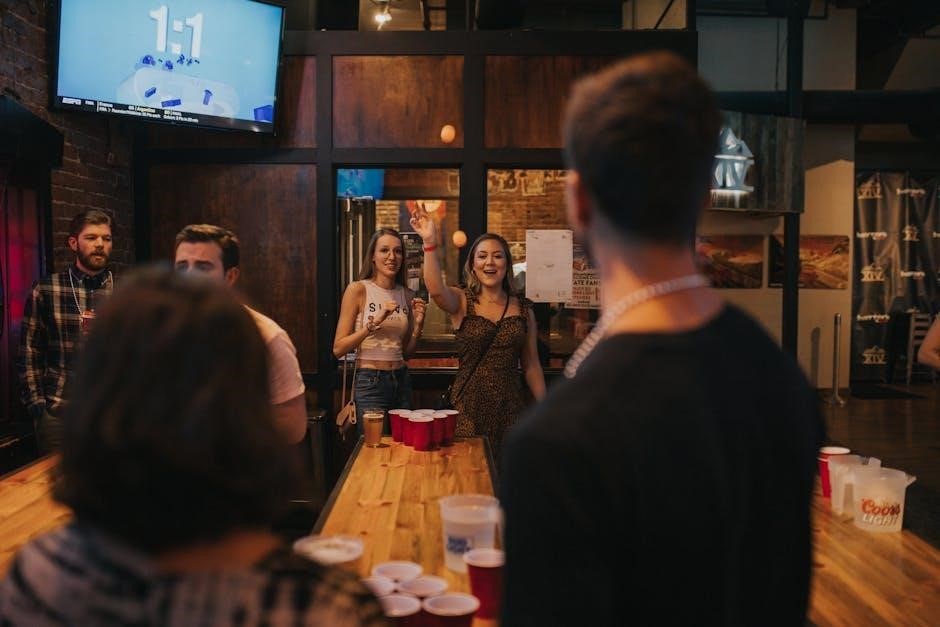
The customary, and often dreaded, consequence for the defeated team in Beer Pong is the consumption of all remaining beer within the cups of the victorious side. This penalty serves as a lighthearted, yet definitive, acknowledgment of defeat and adds a social element to the game’s conclusion.
Traditionally, the losing team divides the remaining liquid equally amongst its members, ensuring shared responsibility for their shortcomings. However, teams can establish alternative arrangements beforehand, such as designating one player to bear the brunt of the penalty.
It’s important to note that while this penalty is a core component of the Beer Pong experience, responsible consumption and adherence to local laws are paramount. Players should always prioritize safety and drink responsibly, ensuring a fun and enjoyable experience for all involved. The penalty can be modified to suit preferences.